


Running Injuries:
Common Training Errors To Avoid
Are you looking for the most effective ways to avoid running injuries? Or have you been dealing with a nagging injury or persistent pain and looking to resolve your issues and get back to pain-free running? At Rebound Fitness & Rehabilitation, our physical therapists can guide you back to health and make sure you can run at your peak potential!
If you’re a runner, you understand the importance of training. Unfortunately, it seems like there is conflicting information, no matter where you look. It seems like one group of experts recommends one type of training when another expert claims that it is actually causing your problems and that you should be doing an entirely different type of training.
With all the changing information about how to prevent injuries, it can help to know there is someone you can count on for answers based in fact, not on a fad. At Rebound Fitness & Rehabilitation, we want to ensure that you avoid running-related pain and injury, so you get out there and enjoy your runs!
Request an appointment with one of our running specialists today, so we can help you train for a marathon or jog through the neighborhood without worrying about an injury getting in your way!


Build Strength, Stability & Balance
Try these guided exercises to improve lower-body strength, balance, mobility, and overall movement confidence.
Soleus Heel Raise Variations
Strengthen the soleus muscle and improve ankle stability with these heel raise variations. This exercise can help support walking, running, balance, and lower-leg endurance.
Single Leg Deadlift with Knee Drive
Improve balance, coordination, and lower-body strength with this functional exercise that targets the glutes, hamstrings, core, and hip stabilizers.
Our Patients Are Seeing Success
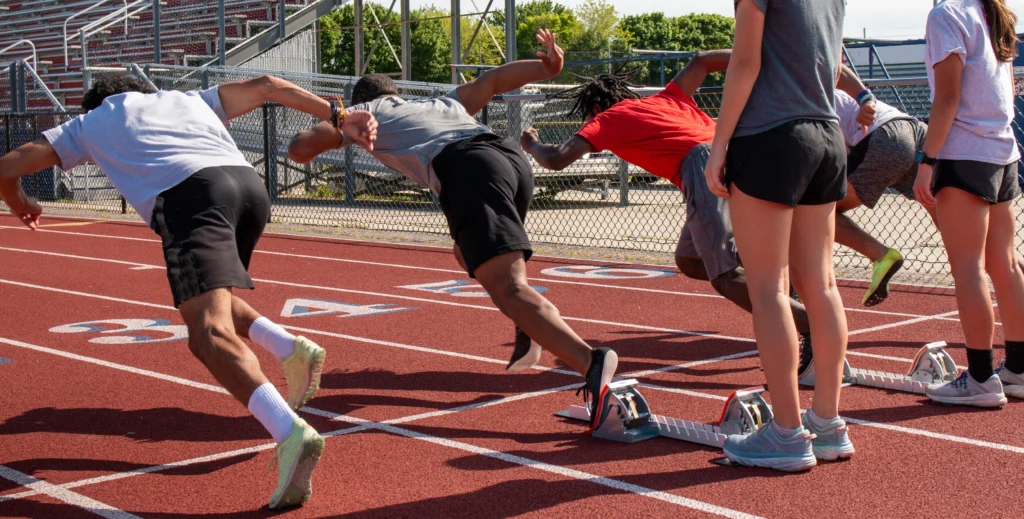
What Are The Leading Training Errors That Cause Running?
Running is one of the most popular activities worldwide. Unfortunately, running is often associated with pain or injury related to training. As technology improves, more and more people search the internet for help with training and recovering from an injury.
Unfortunately, the more desperate you are, the more likely you will look to any solution, regardless of its effectiveness. This, in turn, leaves people susceptible to the troubling amount of misinformation that permeates the running community. For example, too many runners emphasize ineffective solutions like changing their running shoes instead of implementing strategies that have been proven to make a significant difference, like training properly.
Identifying the exact cause of most running-related injuries is often impossible. More often than not, it is a combination of multiple factors or something that seems unrelated to the current issue.
For example, most people don’t know that the leading risk factor associated with runners sustaining an injury is having a previous injury in the last 12 months. The type of injury does not seem as important as the fact you had an injury and did not resolve it entirely. Resolving a prior injury will reduce your risk of getting hurt and keep you running.
Although there seems to be a difference in novice vs. experienced runners, as well as age and gender differences, the risk factors that lead to running injuries are mostly training errors. According to research studies, the most common risk factors include the following:
- Running experience of 0–2 years
- Restarting running after extended rest
- Overtraining (i.e., more than 40 miles per week, men > women)
- Women recreational runners were associated with a greater risk of running-related injury
At Rebound Fitness & Rehabilitation, our physical therapist will help you resolve any pre-existing issues and maximize your training while simultaneously preventing injuries in the future!


Meet Our Team

Colleen Levitz
MS, PT

Jianrong Hong
PT, DPT


Stephanie Berman
ATC, General Manager

Samantha Lodygowski
M.Ed, LAT, ATC

Rennie Stefani
MS, CSCS

Greg Cadichon
ATC, LAT, Founder and Director, Rebound Fitness & Rehabilitation, Inc.


Request An Appointment At Rebound Fitness & Rehabilitation Today!
At Rebound Fitness & Rehabilitation, our physical therapists are up-to-date on the most common risk factors for running-related injuries. Our goal is to ensure you have the tools to train properly to help reduce your risk of future injuries and run at your peak potential! Call today to schedule an appointment with one of our specialists!
Ask a PT
Welcome to our “Ask a PT” feature! This is your go-to spot in the newsletter to get real answers to everyday questions about the body, movement, and feeling your best. Whether you’re dealing with an injury, wondering how to stay active, or just curious about how physical therapy works, our team of physical therapists is ready to help. Each month we’ll share responses, tips, and answers based on questions from you, so if there’s something you’ve been wondering about, don’t be shy! Send it in – we’d love to hear from you!
Q: How long does it take for my injury to heal?
A: Injuries vary in timeline, but the main variables in outcomes are usually for damaged tissue to heal in about 6-8 weeks while building the muscle strength, flexibility, and movement technique that will protect the injured area.

Watermelon Feta Salad
This refreshing summer salad combines juicy watermelon, crisp cucumber, fresh mint, and creamy feta cheese for the perfect balance of sweet and savory flavors.
Ingredients
- 4 cups watermelon, cubed
- 1 cucumber, sliced
- 1/2 cup crumbled feta cheese
- Fresh mint leaves
- Juice of 1 lime
- 1 tablespoon olive oil
Combine watermelon, cucumber, feta, and mint in a large bowl. Drizzle with lime juice and olive oil, then gently toss together. Serve chilled and enjoy.
A light and refreshing recipe that’s perfect for BBQs, beach days, and summer gatherings.
Sources
- https://www.ncbi.nlm.nih.gov/pmc/articles/PMC8329321
- https://www.researchgate.net/publication/260528060_The_Effects_of_Running_Cadence_Manipulation_on_Plantar_Loading_in_Healthy_Runners
- https://journals.sagepub.com/doi/abs/10.1177/0363546518773755
- https://www.sciencedirect.com/science/article/abs/pii/S0966636218316758
- https://www.sciencedirect.com/science/article/abs/pii/S1440244018301798
- https://journals.sagepub.com/doi/full/10.1177/0363546518793657